Server room, data center or hub
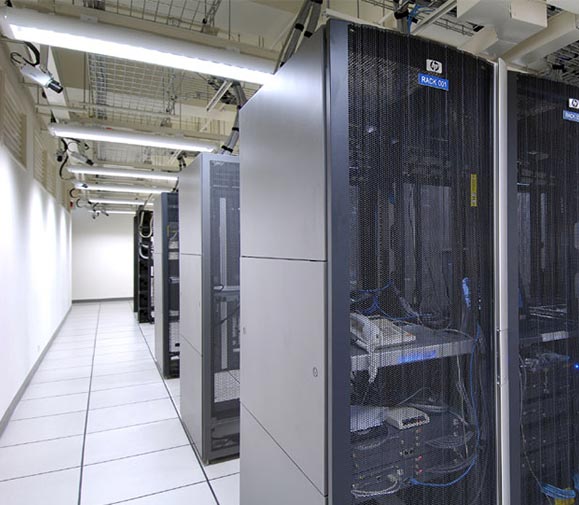
Often, what people refer to as a ‘server room’ or ‘data center’ is actually a ‘hub room’ containing a few racks of routers and servers to distribute data from remote servers. A room with a large number of racks or a multi-room facility dedicated to such equipment can be considered a data center.
In this document, what we refer to as a ‘server room’ is the equivalent of a ‘small data center’ common to many types of offices. It contains a relatively modest number of racks and equipment.
Infrastructure
As well as occupying valuable floor space, the server room will require additional power, cooling and other environmental controls.
It is important to have an experienced person examine the building’s infrastructure well, before making a commitment to lease or buy space. The building must be capable of supporting the power, cooling, weight, and distribution of your technology. M Moser can perform extensive due diligence examinations of the intended location.
Location
The server room once built is generally not moved. In addition, it should probably be near a central shaft called a riser where cables can be routed to other floors.
The server room is a place of heat generation so it’s useful to avoid locations near windows which could make things even harder to keep cool. In addition, the equipment can be heavy and the zones in your building supporting the weight are more likely to be near the building’s core.
Data and power distribution
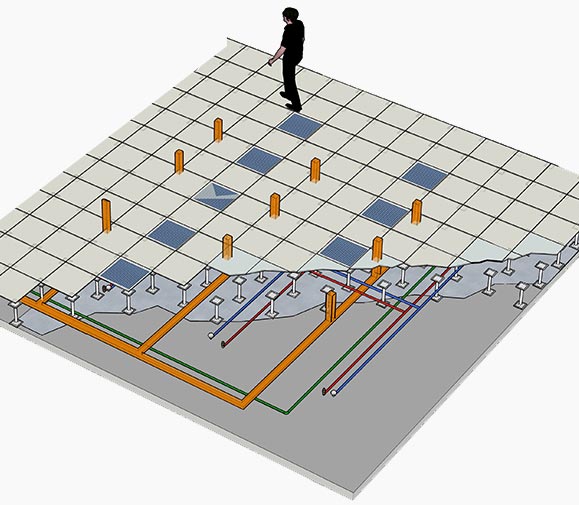
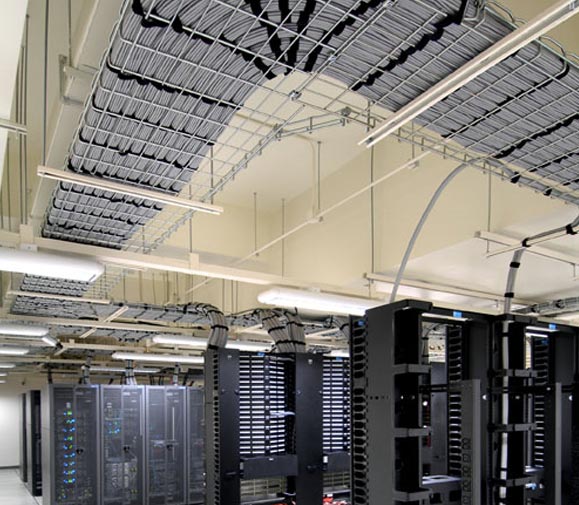
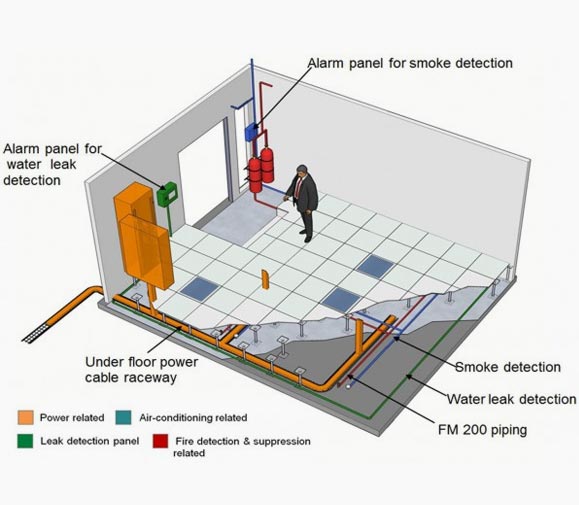
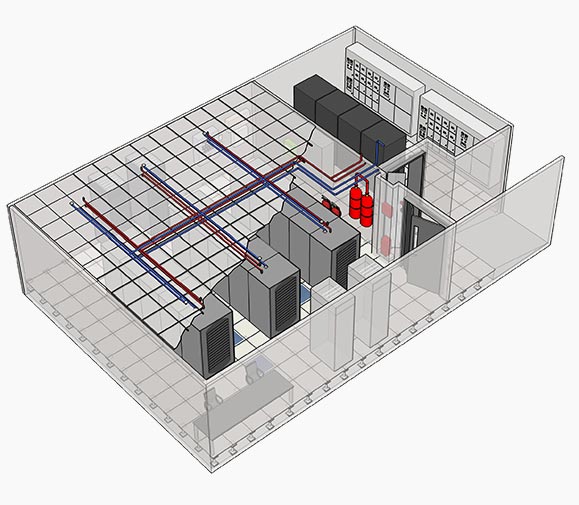
Large cables can usually be seen in the equipment room or data center. These cables must be designed to not pass through the power line to some extent. For example, the data line may be designed to pass through the ceiling while the power line passes below the elevated platform. Of course, the actual setup may have multiple situations, but most IT experts agree to separate power and data lines separately as a basic principle. It is also important to carefully coordinate the relationship with air rationing: to avoid impact on energy efficiency.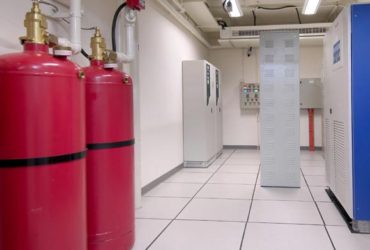
Fire protection
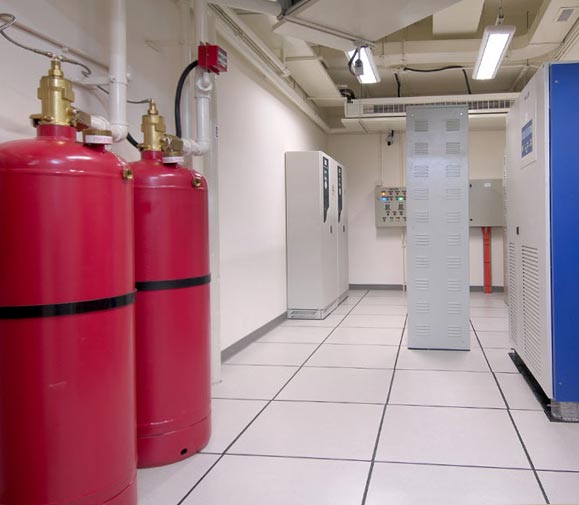
Even for small-scale computer rooms, fire protection equipment is very important as long as it contains important data. Fire sprinkler systems used in regular office spaces are usually not used in the machine room: because water and servers are clearly not mixed together. Even if the probability of a fire is very low, a major accident can occur if the sprinkler system leaks or even accidentally leaks from other facilities.
Fire detection
Extremely sensitive smoke and alarm devices (VESDSA) are often used to enhance protection. VESDA is sensitive to smoke and heat anomalies and feeds back information to the monitoring system, which can be integrated into the building's integrated fire monitoring system. All assembled joints must meet certain standard "level requirements". This rating reflects how long the equipment is resistant to fire. We talk about "refractory materials" rather than "insulation materials" because the fire will eventually burn in after a certain period of time. So there is a problem: How long does this room last before the rescue arrives?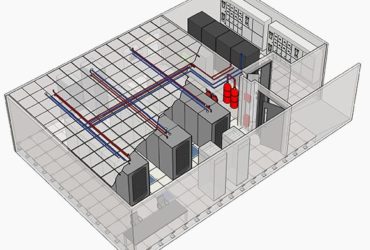
Fire suppression
For data centers, gas fire suppression systems are more reasonable because they have no moisture, they can control the fire, and the server and its stored data are not harmed. These systems use a pressure system, the most common being a compressed mixed inert gas. Usually you will see a red gas cylinder in this space. When necessary, the principle of these systems is to remove the oxygen in the house and control the spread of the fire. When activated, the system sounds an alarm to alert personnel to evacuate before releasing inert gas. If the gas system cannot be considered for budget or other reasons, another option may be to choose dry pipe or early warning spray. They use water to extinguish the fire, but when there is no fire, the tubes are dry, unless a series of unexpected events eventually start them.
Environmental monitoring
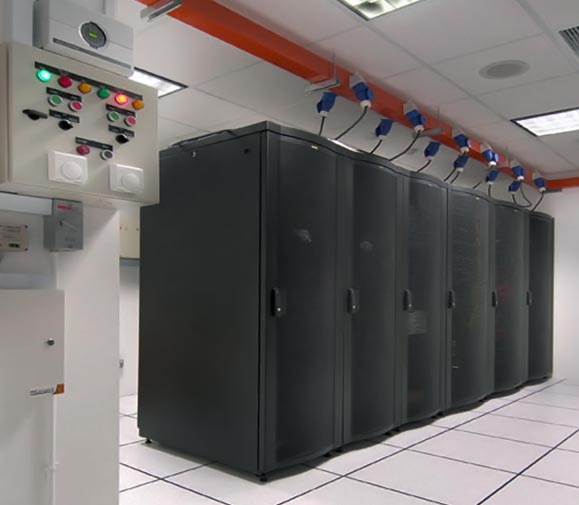
Environmental Monitoring Systems (EMS) are commonly used in spaces where constant temperature, constant humidity, and continuous power supply are required, and can even be used to monitor pipeline leaks. EMS can also be used to monitor the status of UPS, backup batteries and cooling systems. This feature is usually integrated using the UPS interface and can be displayed on a web browser: it can be accessed from anywhere.
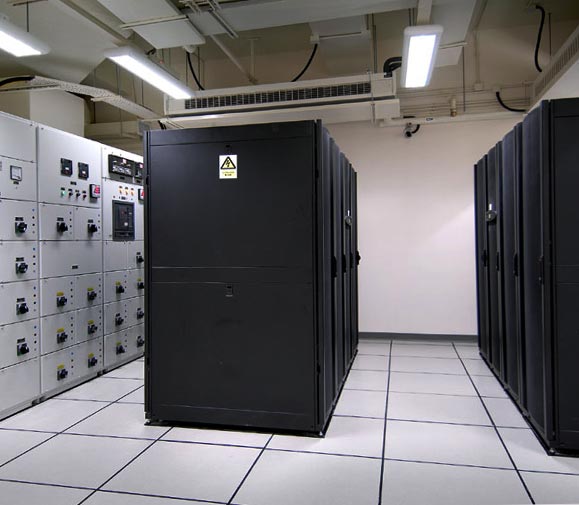
Air Conditioning System
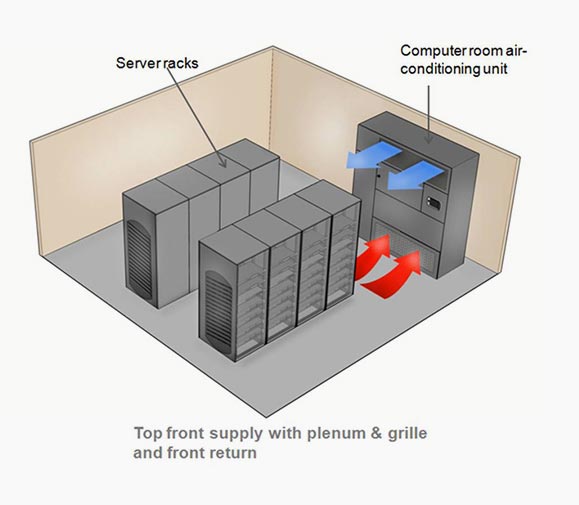
For smaller machine rooms with 1-4 racks, the wall-mounted cooling unit is sufficient to provide adequate cooling. Larger computer rooms (eg, more than 4 racks, arrayed) may be better with a ground cooling system. The "down wind" unit may be more reasonable, as it is necessary to increase the cooling load and the wind. In order to achieve a ground cooling system, a raised platform is usually installed in the equipment room, and the ground air conditioner is installed to continuously cool from the ground. These strategies all require an alternative solution, like the n+1 or n+2 equations, which means: a set of normal operating systems plus a set of backup systems. The backup system should continue to operate when the first system is down or maintained.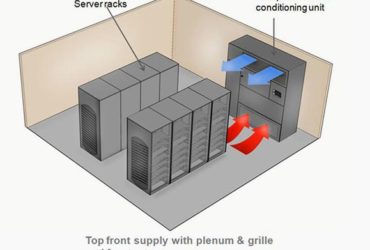
Precise temperature control system
High temperatures can cause the CPU to overheat or the fan to overload, causing irreversible damage to the unit. Precision temperature control air conditioning systems prevent these accidents and take advantage of the precise management of room temperature and humidity levels. Of course, precision temperature-controlled air conditioning systems are expensive compared to conventional systems and are necessary to protect equipment that requires specific temperatures and humidity. As a general safety criterion, the air temperature in the equipment room should be maintained at 18-27 degrees Celsius and the relative humidity is between 40-60%. Remember that even the best precision system can't work effectively if the gas balance is not properly coordinated, designed, and tested.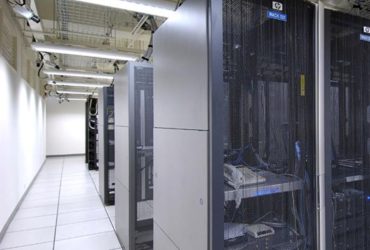
Ceiling system
Mu's extensive project experience shows that artificial false ceilings are usually not suitable for the computer room. The main reason is that the overhead space is required for air conditioning return air and lower air outlet equipment. Adding false ceilings will only further reduce headroom, but individual smaller rooms are sometimes reserved.